In Defense of Cup Plant
- Bethany Keller

- Aug 30, 2025
- 2 min read
Updated: Sep 10, 2025
April 20, 2025
I'm starting a windbreak/privacy screen planting of native Missouri cup plant.
I'm using an upcycled trellis of reclaimed natural materials to provide stability to cup plant when it can start to topple with wind.



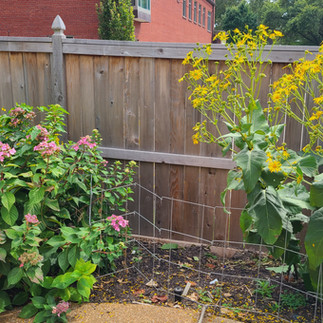




Cup plant is a misunderstood native IMO.
~Is it prolific at reseeding? Yep
~Will you have cup plant babies popping up in year two? You betcha!
~Are the seedlings easy to identify? Also, YES
~Should you include cup plant in your native garden? We say, YES!
In my neighborhood, we have an active discussion forum about all things gardening. Folks in this online group swap plants, tools, and most importantly, knowledge that's locally relevant.
There's been lively discussion on the pros and cons of cup plant. I love it at the back of a native prairie planting - along fences for screening. Not everyone agrees, but here is my defense of cup plant.
Know your plants' strengths:
cup plant grows a thick square stalk that can be pruned back after flowering (or Chelsea chopped to reduce height)
its particular leaf structure forms a cup shape around the square stem creating a natural watering stop for all kinds of pollinators and birds
drought tolerant and extremely hardy
I usually cut back by half high in July - I use its strong stalks for trellising and staking in the following spring. I leave about 12 inches of stalk standing over the winter to provide habitat for native bees and other key pollinators.
It blooms for a long time, provides a pop of yellow, and if you cut back the flower heads for mixed bouquets (especially gorgeous with zinnias, cosmos and goldenrod) you help keep its seed dispersal more under control. It has the most interesting leaf pattern creating a cup for water to collect rain and dew especially during the heat of late summer.
Bees love cup plant. Birds love cup plant.
Bethany loves cup plant.
Happy Spring!

Comments